 Image 1 of 1
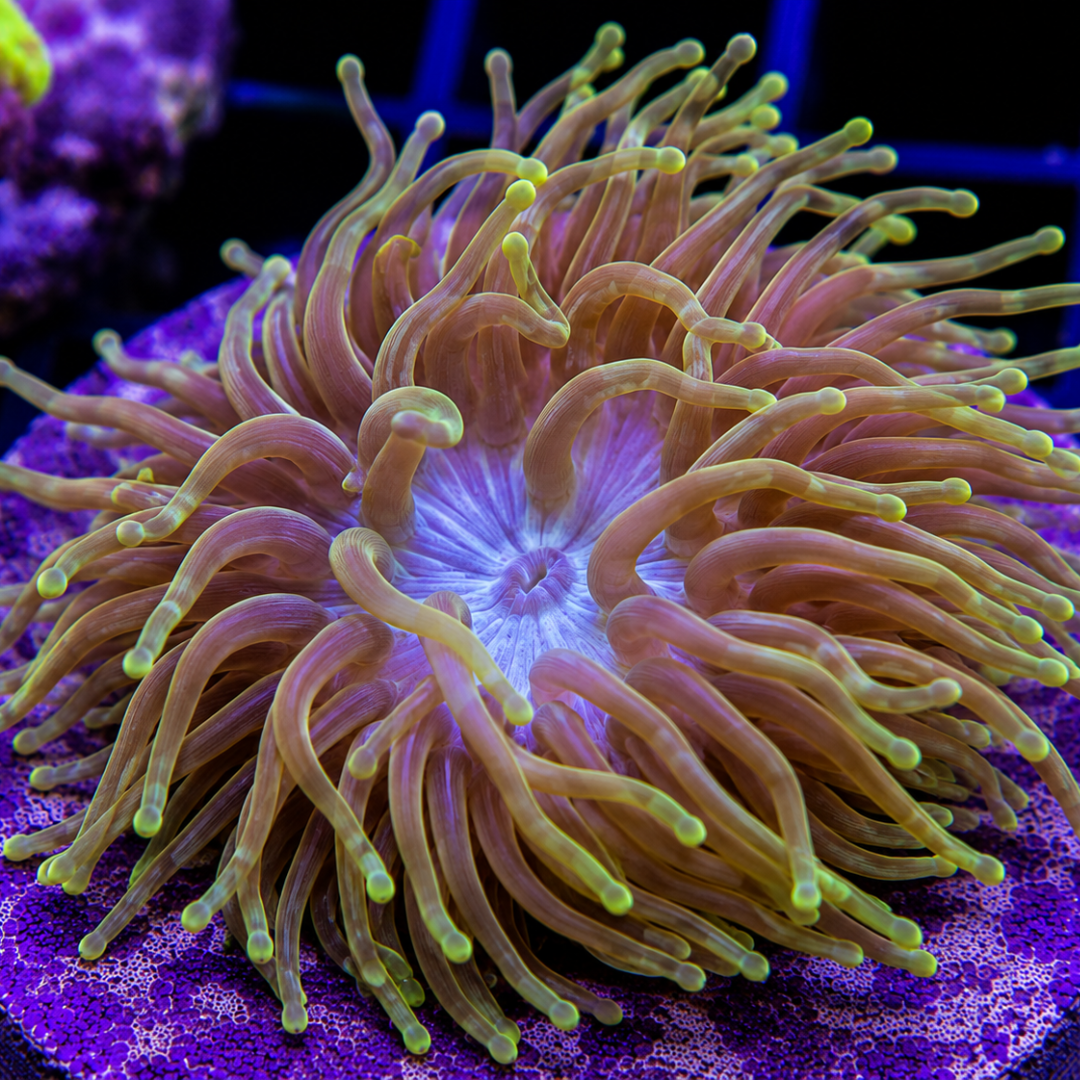
The Long Tentacle Anemone features an exposed oral disc surrounded by long, flowing tentacles. It naturally anchors its foot beneath a deep sand bed, making substrate depth and aquarium maturity important for long-term care.
Key benefits:
Long Flowing Tentacles: Adds visible movement to the lower aquarium.
Sand-Bed Placement: Creates a natural focal point away from elevated rockwork.
Clownfish Host Potential: May host certain compatible clownfish species.
Specifications:
Scientific Name: Macrodactyla doreensis
Common Names: Long Tentacle Anemone, Corkscrew Anemone
Care Level: Advanced
Adult Size: Approximately 12 to 20 inches
Minimum Tank Size: 50 gallons or larger
Lighting: Moderate to high
Water Flow: Low to moderate
Placement: Deep sand bed
Temperament: Aggressive
Diet: Photosynthetic with supplemental meaty foods
Suggested use: Add to a mature marine aquarium with a deep sand bed so the anemone can bury and secure its foot. Protect pump intakes, leave space from corals, and expect it to relocate until suitable conditions are found.
Image note: Product images are for reference only. Some images may be AI-generated and may not represent the exact specimen received.
The Long Tentacle Anemone features an exposed oral disc surrounded by long, flowing tentacles. It naturally anchors its foot beneath a deep sand bed, making substrate depth and aquarium maturity important for long-term care.
Key benefits:
Long Flowing Tentacles: Adds visible movement to the lower aquarium.
Sand-Bed Placement: Creates a natural focal point away from elevated rockwork.
Clownfish Host Potential: May host certain compatible clownfish species.
Specifications:
Scientific Name: Macrodactyla doreensis
Common Names: Long Tentacle Anemone, Corkscrew Anemone
Care Level: Advanced
Adult Size: Approximately 12 to 20 inches
Minimum Tank Size: 50 gallons or larger
Lighting: Moderate to high
Water Flow: Low to moderate
Placement: Deep sand bed
Temperament: Aggressive
Diet: Photosynthetic with supplemental meaty foods
Suggested use: Add to a mature marine aquarium with a deep sand bed so the anemone can bury and secure its foot. Protect pump intakes, leave space from corals, and expect it to relocate until suitable conditions are found.
Image note: Product images are for reference only. Some images may be AI-generated and may not represent the exact specimen received.