 Image 1 of 1
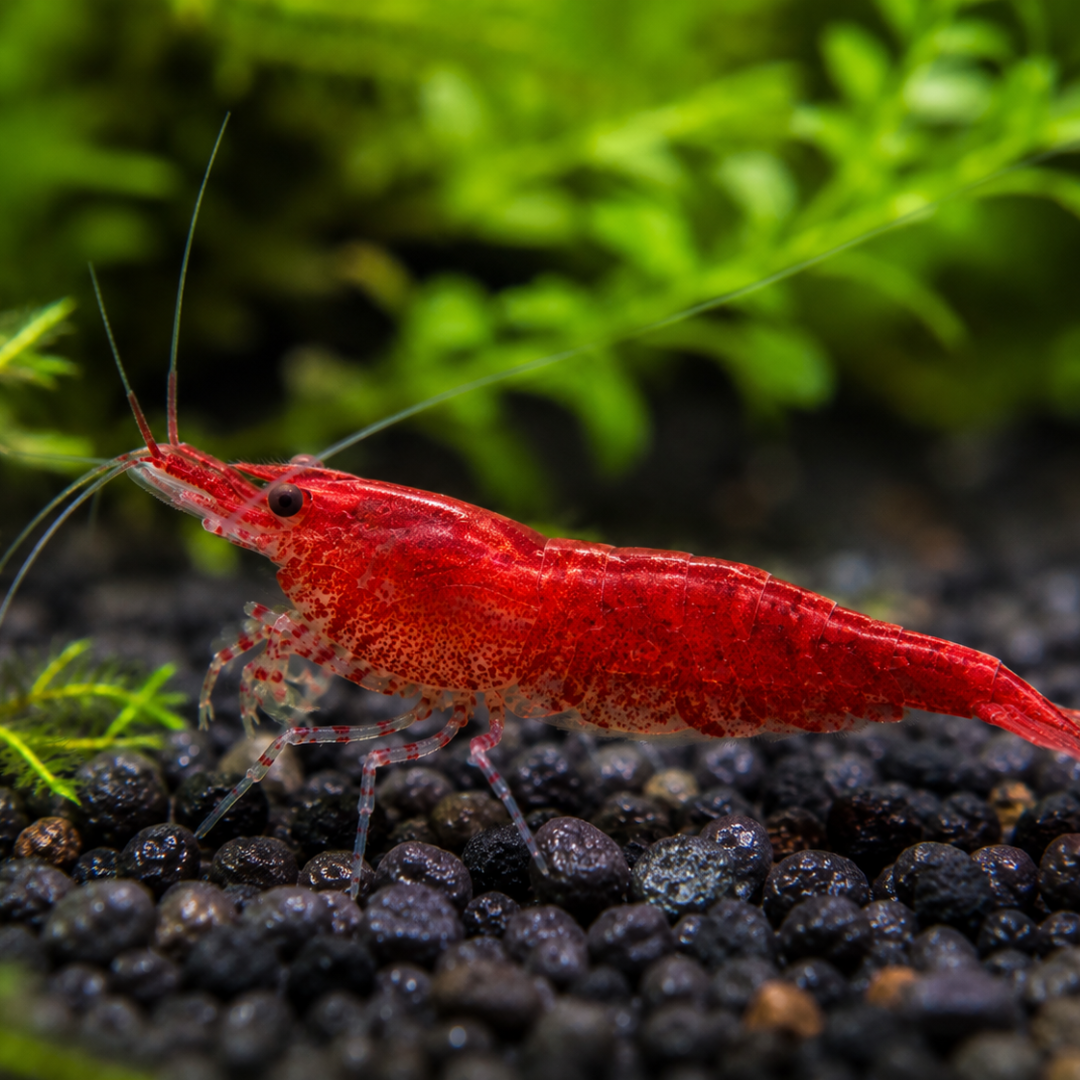
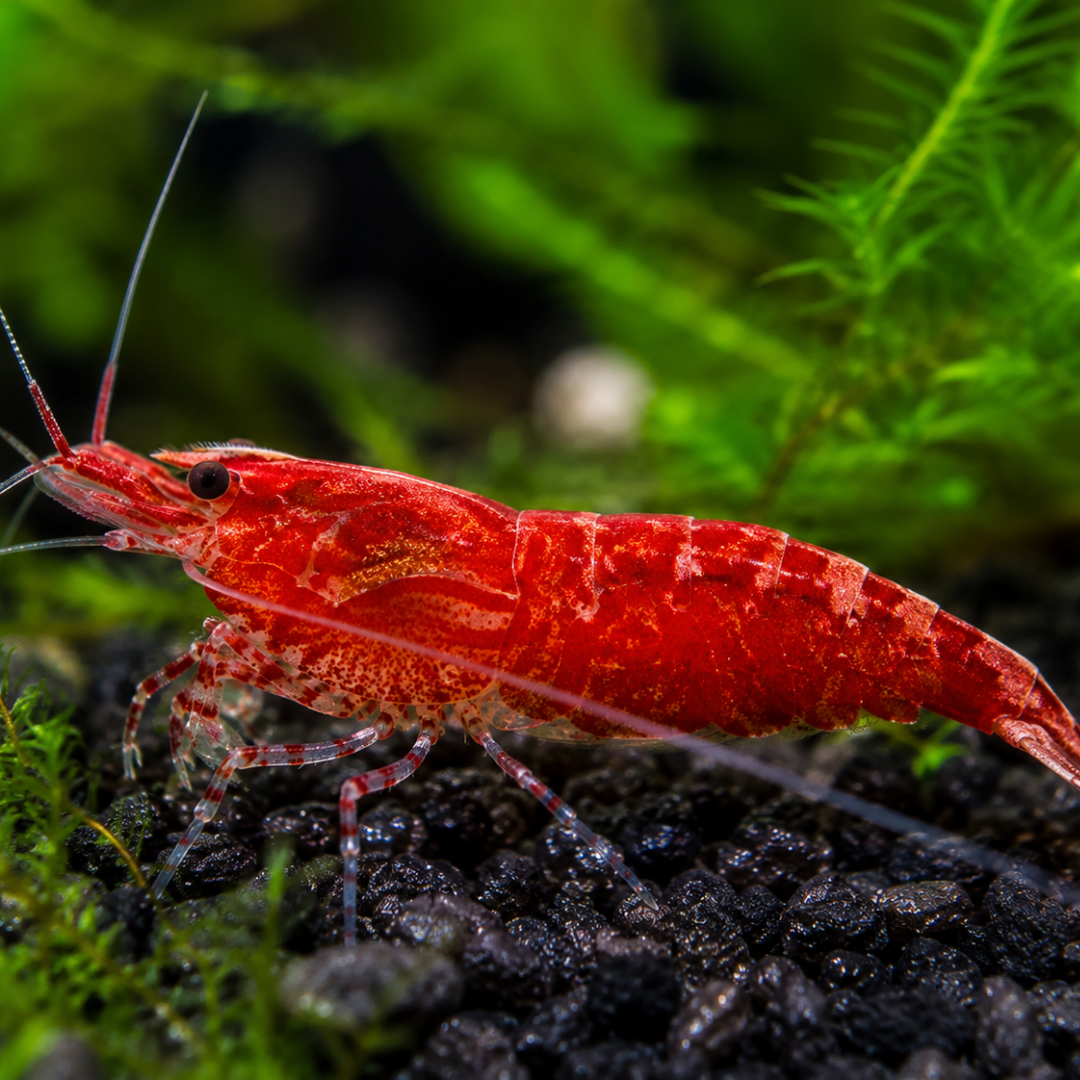
The Bloody Mary Shrimp is a selectively bred Neocaridina davidi variety known for deep red coloration extending through its translucent body tissue. These peaceful dwarf shrimp spend the day grazing on biofilm, soft algae, and organic material.
Key benefits:
Deep Red Coloration: Adds strong color to planted and shrimp-focused aquariums.
Biofilm Grazer: Feeds continuously on mature aquarium surfaces.
Peaceful Temperament: Works well in shrimp colonies and carefully selected communities.
Specifications:
Scientific Name: Neocaridina davidi
Variety: Bloody Mary
Care Level: Easy
Temperament: Peaceful
Adult Size: Approximately 1 to 1.5 inches
Minimum Tank Size: 5 gallons
Preferred Temperature: 68 to 76°F
pH Range: Approximately 6.8 to 7.6
Diet: Omnivore and biofilm grazer
Plant Compatibility: Yes
Suggested use: Add to a fully cycled aquarium with stable mineral content, moss, plants, and protected filter intakes. Feed quality shrimp food sparingly when natural biofilm isn’t sufficient. Avoid copper-based medications and aggressive fish.
Image note: Product images are for reference only. Some images may be AI-generated and may not represent the exact specimen received.
The Bloody Mary Shrimp is a selectively bred Neocaridina davidi variety known for deep red coloration extending through its translucent body tissue. These peaceful dwarf shrimp spend the day grazing on biofilm, soft algae, and organic material.
Key benefits:
Deep Red Coloration: Adds strong color to planted and shrimp-focused aquariums.
Biofilm Grazer: Feeds continuously on mature aquarium surfaces.
Peaceful Temperament: Works well in shrimp colonies and carefully selected communities.
Specifications:
Scientific Name: Neocaridina davidi
Variety: Bloody Mary
Care Level: Easy
Temperament: Peaceful
Adult Size: Approximately 1 to 1.5 inches
Minimum Tank Size: 5 gallons
Preferred Temperature: 68 to 76°F
pH Range: Approximately 6.8 to 7.6
Diet: Omnivore and biofilm grazer
Plant Compatibility: Yes
Suggested use: Add to a fully cycled aquarium with stable mineral content, moss, plants, and protected filter intakes. Feed quality shrimp food sparingly when natural biofilm isn’t sufficient. Avoid copper-based medications and aggressive fish.
Image note: Product images are for reference only. Some images may be AI-generated and may not represent the exact specimen received.